Published February 4, 2026
February 16th is Presidents’ Day in the United States. While this holiday first started as a way to honor the birthday of the first U.S. president, George Washington, it has since evolved into a holiday where many Americans celebrate all the presidents.
Here in Indiana, we have good reason to celebrate, since there have been three presidents with ties to the Hoosier state. Read on to find out which president with Indiana history only served in office for 30 days, which one grew up in a log cabin, and which one helped create Yosemite National Park.
William Henry Harrison
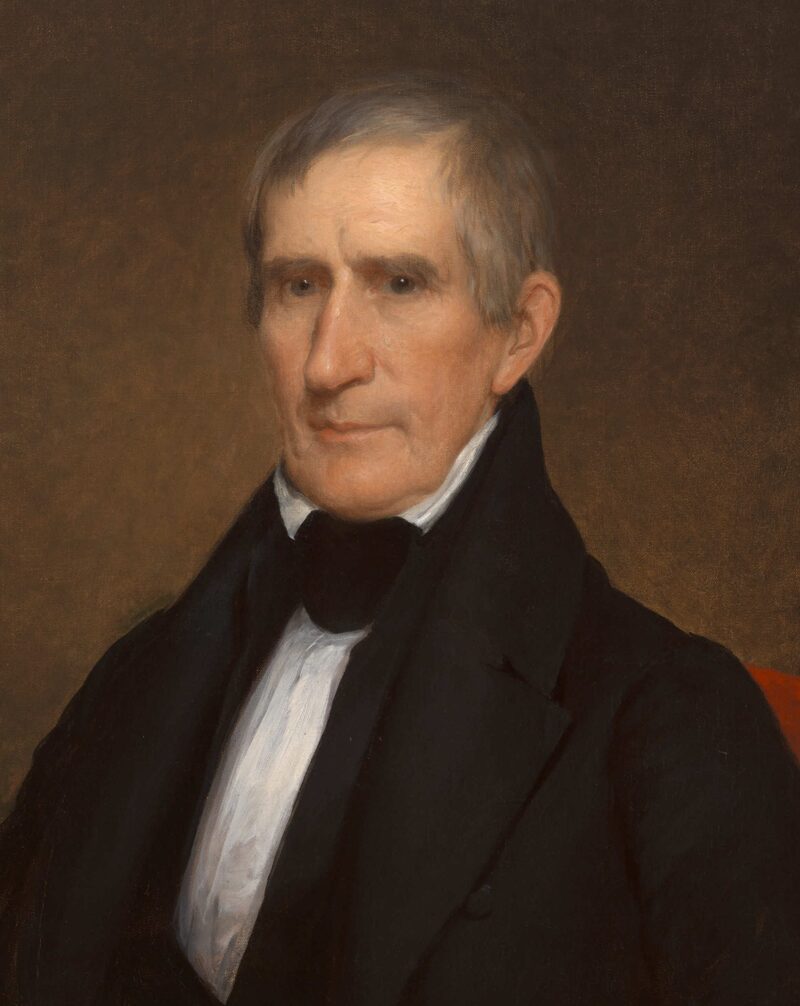
William Henry Harrison was the 9th president of the United States and lived in Indiana for well over a decade (back before it was even a state!) before he eventually became president.
Originally born in Virginia in 1773, William Henry Harrison joined the military when he was 18 and served in the Northwest Territory (what is now Ohio, Indiana, Michigan, Illinois, Wisconsin, and some of Minnesota) for several years. After leaving the military, he became the Northwest Territory’s secretary, and then its first congressional delegate. In 1800, Congress created the Indiana Territory (which eventually became Indiana and Illinois), and they named Harrison as this territory’s new governor, a role he held for 12 years.
While governor, he had conflicting duties to protect the rights of the local indigenous Americans but to also help the U.S. get more land as the country expanded westward. Harrison frequently negotiated treaties with indigenous tribes asking them to give up their land for very little money, and if they didn’t sign, he would call in the military to remove them from the land by force. Naturally, tensions between Harrison and the indigenous Americans ran high and the breaking point eventually came at the Battle of Tippecanoe. Several indigenous tribes had joined forces to keep white settlers off their land, and Harrison led 1,000 men to fight them at Tippecanoe Creek. After several days of fighting, Harrison eventually won the battle and became a national hero (though these actions may seem less heroic today).
When Harrison ran for president in 1840 with John Tyler as his vice presidential pick, he played off his success at the Battle of Tippecanoe with the campaign slogan “Tippecanoe and Tyler, too.” This slogan painted him as a man of the people, out on the frontier fighting to protect and expand U.S. lands. Harrison won the election and was sworn into office on March 4, 1841. He was 68 at the time—the oldest president to take office until Ronald Regan.
Despite the cold, rainy weather on his Inauguration Day, Harrison decided not to wear a coat and gave a speech that was almost two hours long—the longest inaugural address in history. Three weeks later, Harrison became ill and died just 30 days after becoming president. While it has been widely believed that Harrison died of pneumonia, some scholars argue that he actually died from typhoid fever after drinking contaminated water at the White House. Regardless, to this day, William Henry Harrison is known as the president with the shortest term in office and is also a symbol of America’s successful and ruthless expansion westward.
Want to see a bit of Indiana history in real life? Head down to Vincennes to visit Harrison’s mansion, Grouseland.
Abraham Lincoln
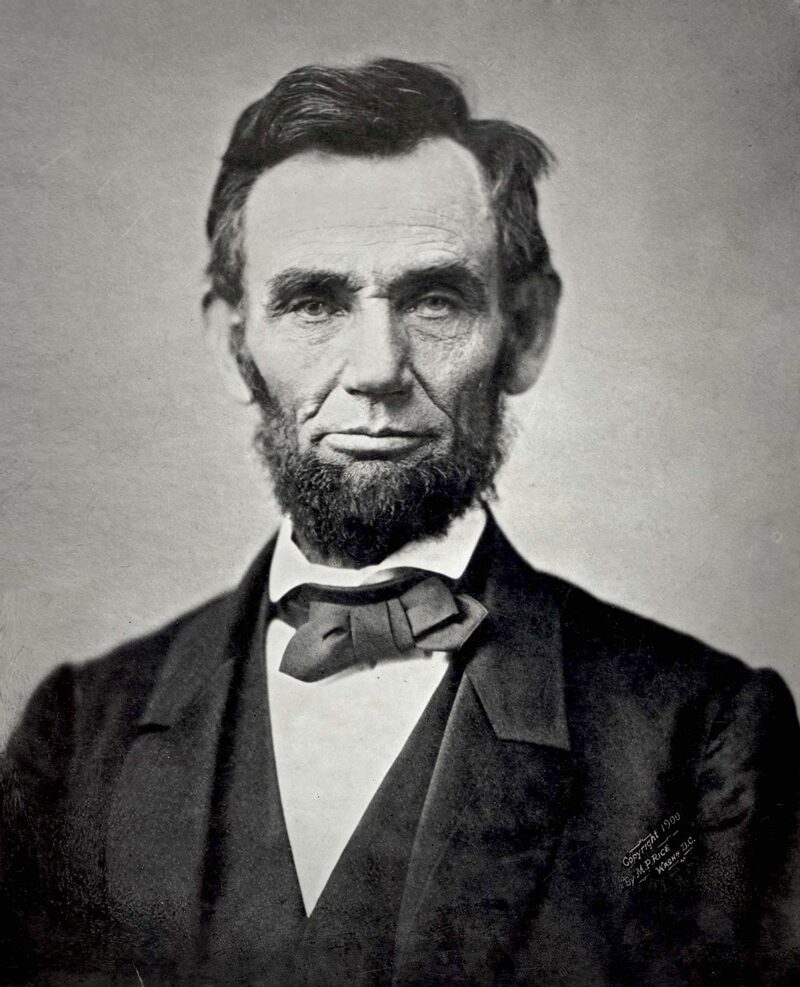 Perhaps the most famous president after George Washington, Abraham Lincoln is known as the country lawyer who went on to change the entire United States by abolishing slavery and leading the country during the Civil War. But did you know that Lincoln spent most of his childhood in Indiana?
Lincoln was born in a log cabin on a Kentucky farm in 1809 and moved to southern Indiana with his family when he was just 7 years old. While in Indiana, he helped his father work the land and, over the years, became especially handy with an axe. By the time he was a teenager, he was one of the strongest (and tallest) kids in the community. Lincoln didn’t go to school, but he did educate himself by reading as many books as he could. He also listened to his neighbors talk about local politics and then discussed those issues with his family back at home.
In 1830, when Lincoln was 21, his family moved to Illinois. A few years later, in 1834, Lincoln was elected to the Illinois state legislature, and he passed the bar exam in 1836 after teaching himself law. He also served in the U.S. House of Representatives from 1846–1849. He ran for Senate in 1856 as a member of the Republican Party, which opposed new U.S. territories adopting slavery practices. Lincoln lost the race to Democrat Stephen Douglas, but ended up beating Douglas later in the 1860 election to become the 16th president of the United States.
Unfortunately, many in the south opposed having a president who wouldn’t allow slavery into new U.S. territories. Several states seceded to form the Confederate States of America in 1861, the same year that Lincoln took office, and the Civil War began. After two years of intense fighting, Lincoln issued the Emancipation Proclamation on January 1, 1863, which declared “that all persons held as slaves” who lived in the rebellious states (but not Union states) were now free. This act drastically changed the tone of the war, making the fight about slavery versus freedom, and eventually paved the way to the addition of the 13th, 14th, and 15th amendments to the Constitution in 1865–1870. These amendments, respectively, abolished slavery throughout the United States, gave formerly enslaved people citizenship and rights, and gave Black men the right to vote.
In July 1863, over 50,000 men died fighting at the Battle of Gettysburg, the bloodiest battle of the Civil War. In November, Lincoln went to Gettysburg, which had been turned into a national cemetery, and gave a short speech. In it, Lincoln quoted the Declaration of Independence by saying that “all men are created equal,” and also stated that there would be a “new birth of freedom” after the Civil War ended. His Gettysburg Address may be the most famous and most quoted speech in all of American history.
In the fall of 1864, Lincoln was reelected as president. On April 14, 1865, he went to see a play at Ford’s Theatre in Washington D.C., where he was shot and killed by Confederate sympathizer John Wilkes Booth, almost immediately turning Lincoln into a national martyr. Despite his tragic death, Lincoln left behind an enduring legacy that underlines the American ideals of unity and freedom for all Americans.
Interested in seeing where Lincoln grew up? Visit the Lincoln Boyhood National Memorial in Lincoln City!
Benjamin Harrison
Born in 1833 in Ohio, Benjamin Harrison has a stronger tie to Indiana than either William Henry Harrison or Abraham Lincoln—he’s the only U.S. president to be elected directly from the state of Indiana.
Growing up near the farm of his grandfather, William Henry Harrison, Benjamin Harrison was tutored at home and had the same intense love of reading as Abraham Lincoln. After graduating from Miami University in Ohio, he moved to Indianapolis to start his own law firm. He supported the Republican party early on and even campaigned for Abraham Lincoln in 1860.
During the Civil War, Harrison joined the 70th Regiment of the Indiana Volunteers, eventually becoming a brigadier general. Once the war ended, he ran for governor of Indiana in 1876 but lost. In 1880, he became a U.S. Senator for the state of Indiana and had several specific goals he fought for: pensions for Civil War veterans, a modernized navy, conserving land out west, and tariffs. He also voted against the Chinese Exclusion Act, which prevented Chinese immigrants from entering the U.S. In 1888, he ran for president against incumbent President Grover Cleveland, and he won via the Electoral College.
As president, Harrison continued to fight for the same things as he did when he was a senator. He helped significantly expand the United States’ navy and he founded three National Parks (Yosemite, Sequoia, and General Grant). Harrison endorsed two bills to stop southern states from preventing Black Americans from voting and he also paved the way for the Pan-American Union, which promoted cooperation between the U.S. and the countries in Latin America.
However, Harrison’s time as president wasn’t perfect. He supported the McKinley Tariff Act of 1890, which put high tariffs on international companies as a way to protect American companies, but ended up making U.S. products more expensive instead. When Harrison ran for re-election in 1892, he ended up losing to Grover Cleveland. While he may not be as memorable as his grandfather, William Henry Harrison, or Abraham Lincoln, Benjamin Harrison did leave a legacy that gave us several national parks, more civil liberties, and established the United States as a major international player.
And if Benjamin Harrison has sparked your interest and you want to learn more about him, you can visit his home right here in downtown Indy.
Who knew that Indiana had such ties to the U.S. presidency? This Presidents’ Day, you can still celebrate George Washington, but you can also honor your Hoosier heritage by learning more about William Henry Harrison, Abraham Lincoln, and Benjamin Harrison and the impact they had on America.
Learn more about the presidents here: